cryoDuck 2026 - Tokyo Days
I was in Japan for the 2026 cryoDuck Tokyo Days event. This is a cryo-EM conference with a heavy focus on methods development, facility management, throughput and automation. I will spare the cryo-EM blow-by-blow (more to come on that some other time), but wanted to document some of the special facilities that we visited.
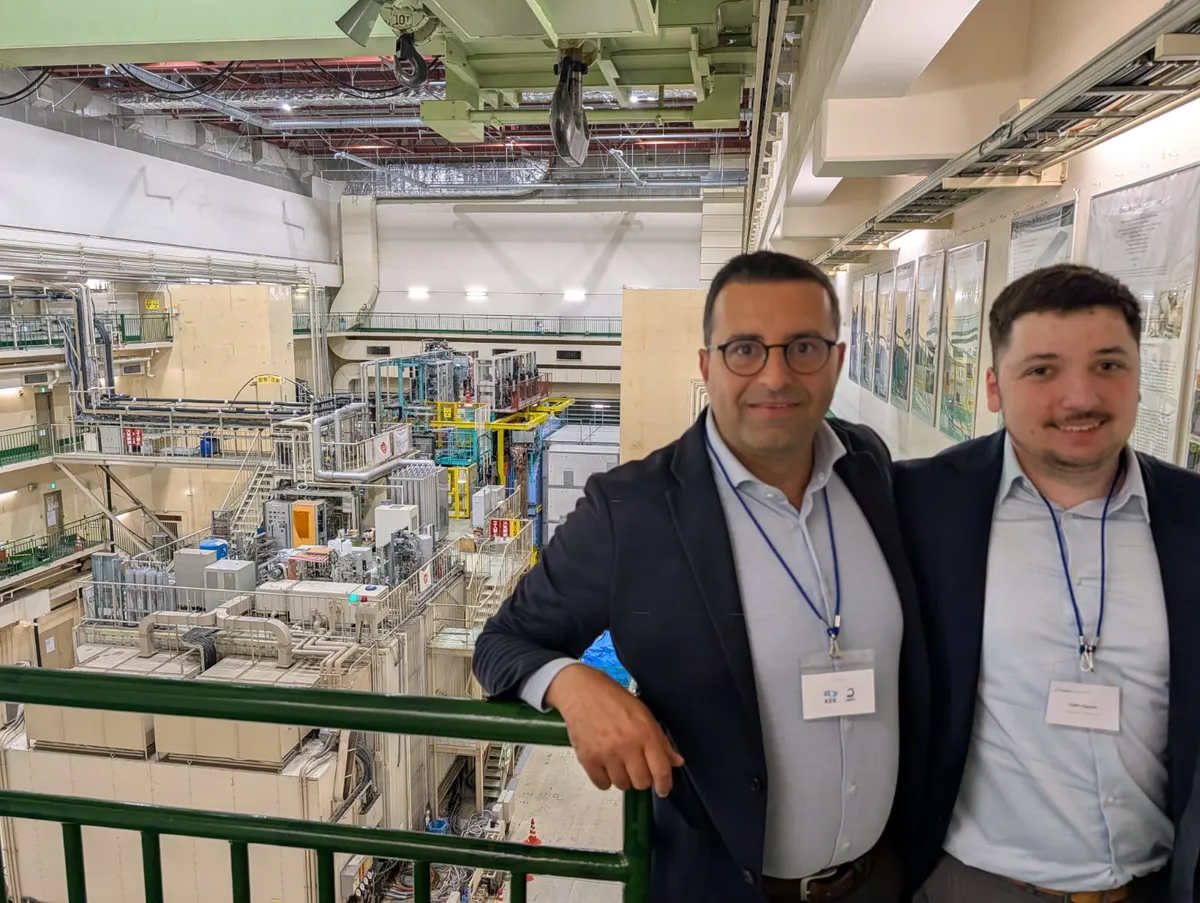
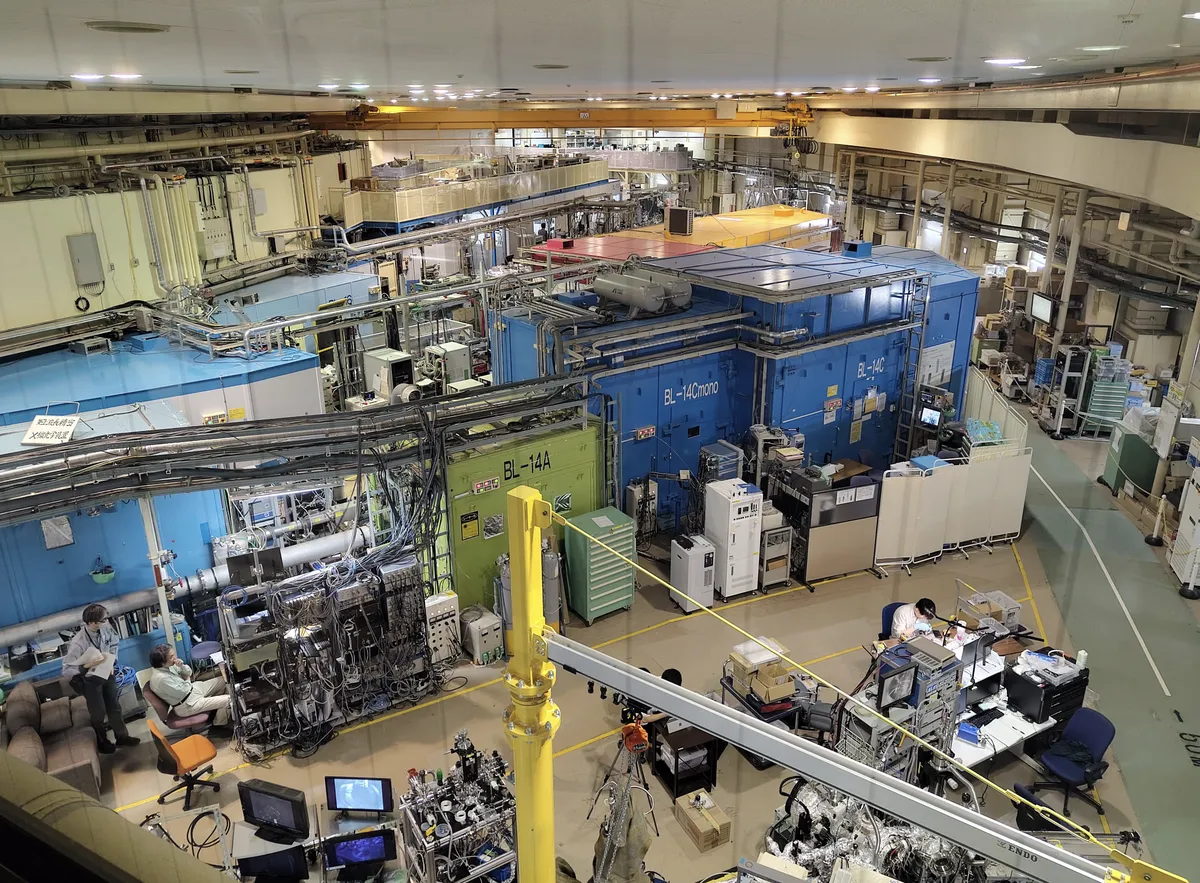
The conference was quite hectic. Day one was at the KEK beamline facility in Tsukuba, and included tours of the Photon Factory (PF) synchrotron, cryo-EM facility, and Belle II detector.
Synchrotrons are circular particle accelerators, originally used for physics research, although now frequently built as a light source for X-rays that are useful in X-ray crystallography and other X-ray physics/biophysical techniques. Electrons are accelerated to multiple GeV and produce photons (X-rays) that come off the synchrotron tangent to the beam at the bending magnets. These X-rays are vastly more brilliant than those from a home X-ray source, which lets you collect data faster and from smaller crystals. They're also tunable across a range of wavelengths, enabling experimental techniques like multiwavelength anomalous diffraction (MAD).
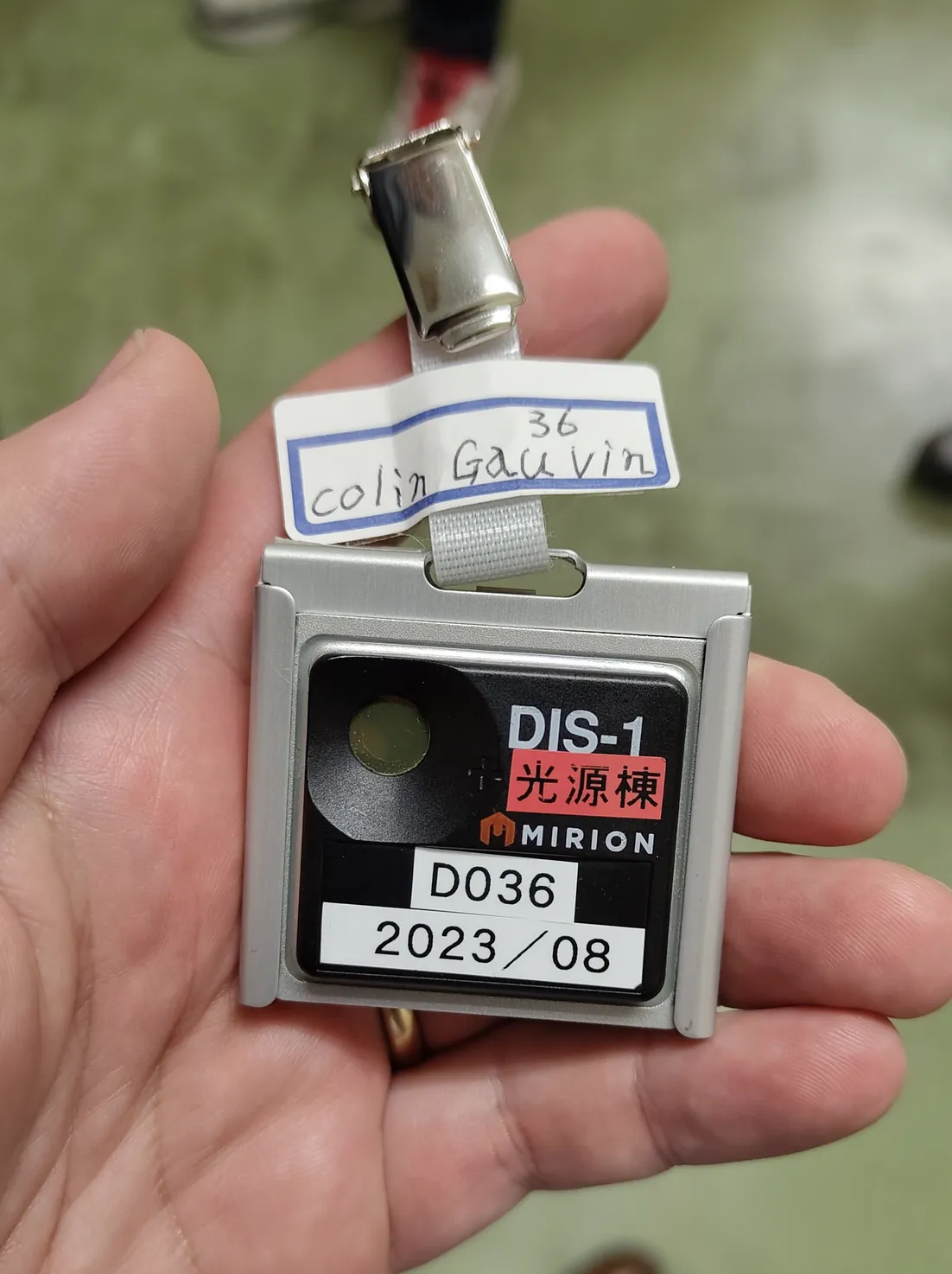
To enter the Photon Factory experimental hall, everyone had to wear a Mirion DIS-1 — a passive ion-chamber dosimeter the size of a credit card. No battery, no display; it stores accumulated exposure in solid-state memory and you plug it into a reader station to find out what you've absorbed. It's specifically rated for pulsed radiation fields, which a synchrotron is.
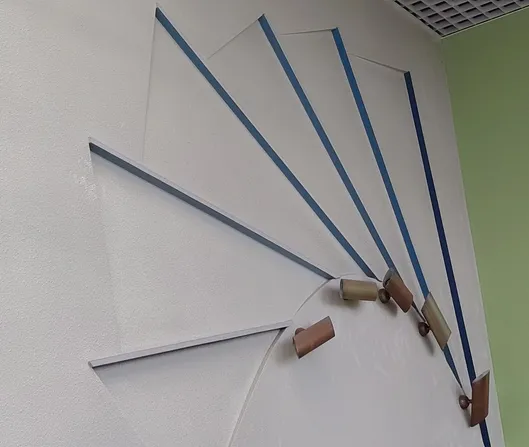
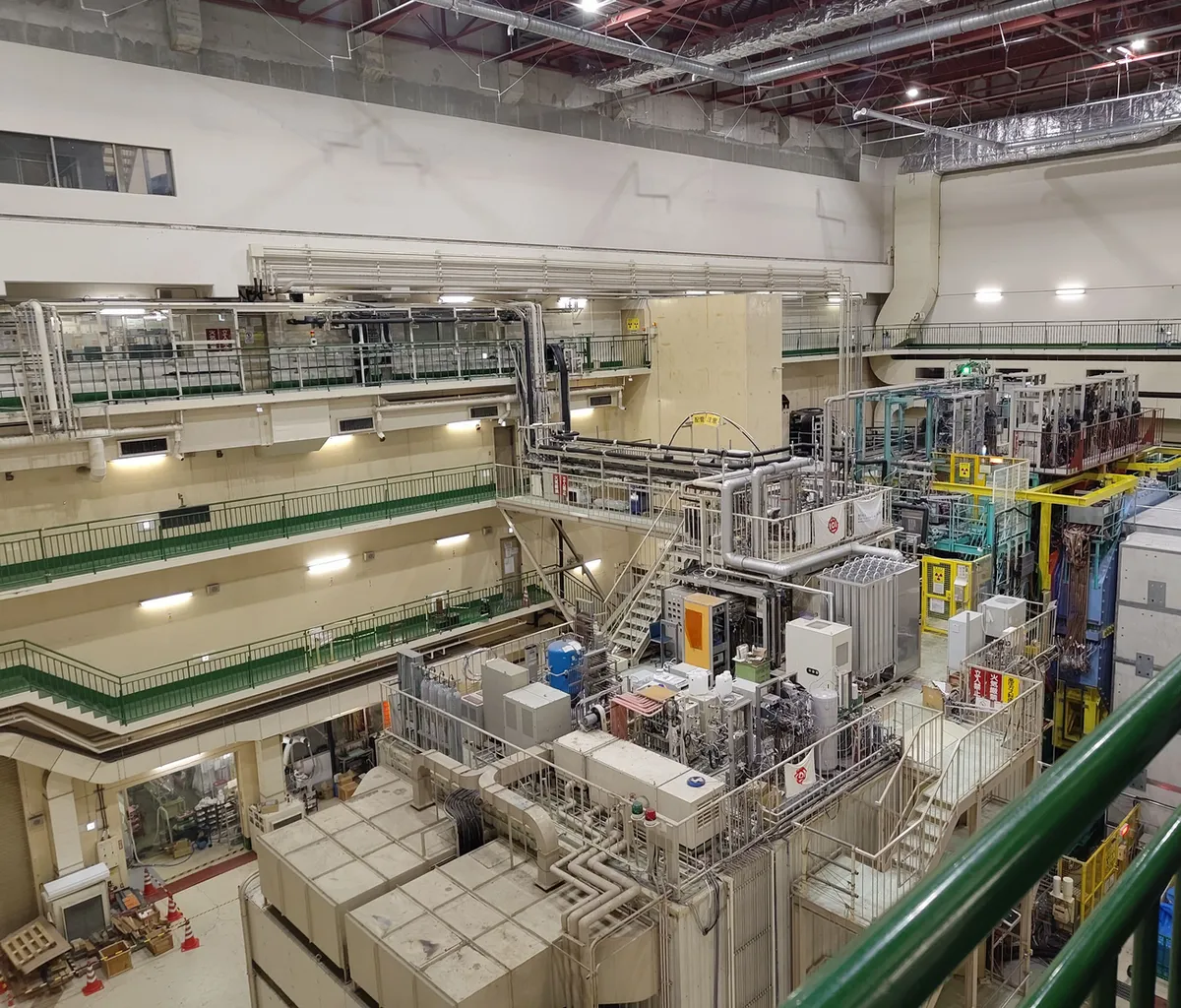
In addition to the Photon Factory beamline, we also received a tour of the Belle II detector facility. This is a massive detector coupled to the flagship circular particle accelerator (SuperKEKB) that smashes together electrons and positrons at near-speed-of-light, with the purpose of detecting the signature of subatomic particles that may violate the Standard Model of particle physics. It is multiple stories tall and generates ~15 TB of data per day. While any given event is unlikely to produce information that would shed light on the process of CP violation in B-meson decay, statistical analysis of decades of data may provide the necessary signatures to fuel our future understanding of particle physics.
I also specifically want to thank Toshio-san, who I have known online for a couple of years now, and finally got to meet in person. His enthusiasm is infectious, and he was an excellent tour guide of the KEK facility. In general, there is an air of pride in the quality of the science at KEK that is well deserved. The researchers there are professional scientists, but not the sterile, boring kind. There's a real sense that they're still genuinely amazed at what they're working on.
On day two we had the opportunity to visit the JEOL Tokyo showroom/headquarters. JEOL is an incredible company, practically founding the market of commercial electron microscopes. They have manufactured scientific instruments for advanced analyses for over 75 years, including TEM, SEM, mass spectrometry, NMR, MicroED, and more.
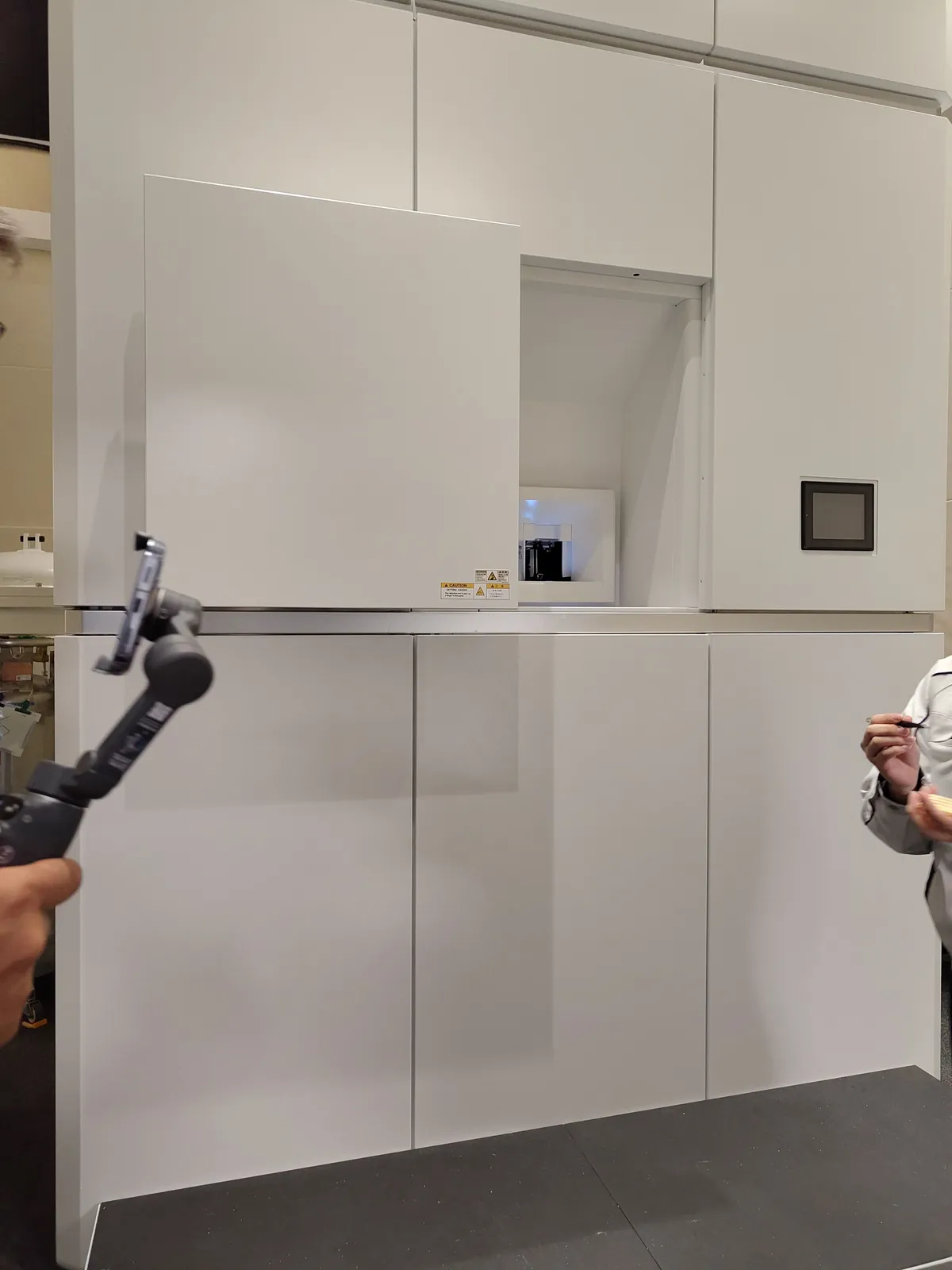
The showroom has a number of working instruments from their current lineup, and we were able to get a tour and watch hands-on usage of all of them. Of particular relevance to my field is the mighty CryoARM 300, which is such a behemoth that I was unable to fit it all inside one image:
Many thanks to Makino-san of JEOL who I (again) had met online but never in person until this trip. His expertise with the CryoARM instruments is entirely unparalleled and I appreciated all of the conversations we had over the course of this conference. The quality of the JEOL scientists and engineers mirrored exactly what I saw at KEK - everyone I met was a true professional and I came away from the visit seriously impressed by the scientific culture there.
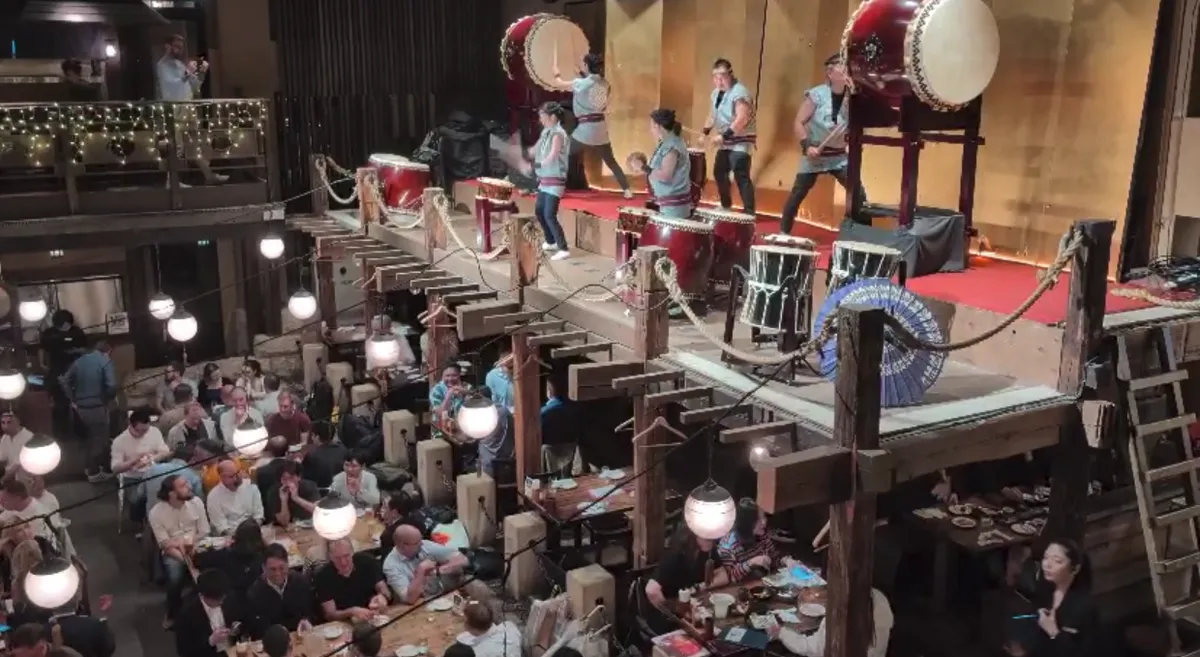
Day three was a more typical conference day - talks in a conference room all day, followed by conference dinner at Gonpachi Nishi-Azabu, the restaurant that inspired the House of Blue Leaves set in Kill Bill.
While the conference was officially over, I was able to take the next day to go visit with Professors Rado Danev and Masa Kikkawa at University of Tokyo, and tour the facilities that they have built there. Rado's prior work with cryo-EM of GPCRs has been a valuable resource for me throughout my career - it was fantastic finally getting to meet him.
I came away from this trip convinced that if the rest of the world ceased to exist, structural biology and cryo-EM would continue entirely unhindered in Japan. They possess an unmatched combination of physics, biology, and engineering expertise, paired with a culture of collaboration and openness that leaves no doubt in my mind that they will continue to define the future of cryo-EM.
Beyond science, I had what I imagine is the full Japan experience: more sushi than I could have ever imagined, wagyu beef that just fell apart, rail transit that was mind-bogglingly fast, and a distant magnitude 6.7 earthquake to top it all off (which was just completely shrugged off, btw). I look forward to my next visit and continued collaboration with my colleagues there, and thanks, of course, to Mazdak for recognizing this unique environment and dragging us all halfway around the globe. It was a fantastic event.